
Starris SDA Space-Proven Monolithic Telescopes
Detect, monitor, & characterize the space domain
High-resolution optics
for small satellites available in UV, Visible, and IR configurations
Starris compact telescopes enable payload and platform providers to configure and deploy rapid, low-risk solutions for responsive space.
-
Patented monolithic-telescope design
-
Simplified integration
-
Rugged and stable
-
Long focal length with diffraction-limited image quality
-
Excellent SWaP efficiency
-
Compact and low mass
-
Superior image quality and radiometry
-
Proven reliability for multi-year missions
-
Pre-aligned and shelf-stable
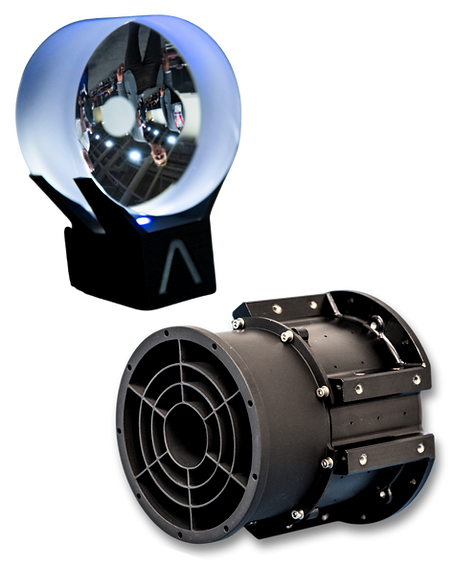
Product Line
Starris SDA space telescopes
SDA-85
253VisNIR
SDA-85 306VisNIR
SDA-85 650VisNIR
SDA-250 2000VisNIR

Single structure = optimal system
Starris SDA monolithic telescopes integrate all optical and mechanical surfaces into a single structure — eliminating metering frameworks and alignment sensitivities.
By shaping a single fused silica block into a compact optical body, the monolithic telescope design combines multiple optical surfaces into one robust element.
Bringing rugged and compact optical payloads to space
Starris is the manufacturing partner for monolith telescopes developed by Lawrence Livermore National Lab Space Program in collaboration with Starris’s parent company, Optimax Systems. The partnership is bringing rugged, scalable optical payloads to the space industry by solving manufacturability at scale.
Our patented* monolithic telescope:
-
consists of a single piece of ultra high-quality fused silica with primary and secondary surfaces polished on opposite sides of the monolithic glass, ensuring perfect alignment between the surfaces
-
has an athermal design, enabling the focus to remain constant under temperature changes, minimizing the need for complicated on-orbit focus adjustment mechanisms.
-
permits more extreme optical surfaces in the design, enabling high focal length to physical length ratios while maintaining diffraction-limited performance, enhancing the capabilities of small satellites.
Product configurations:
The Starris SDA line is modular and flexible, with options for different imaging bands (UV, VIS, IR), fields of view, and detectors. Common specifications include:
-
Wavelength: UV, VIS, NIR options
-
Materials: Aluminum, Invar, Carbon Fiber
-
Temperature: -20°C to +50°C
-
Vibration: NASA GEVS (GSFC-STD-7000B)
-
Radiation Tolerance: TID: 30 krad (Si) ; LET ≥ 37.5 MeV.cm2/mg
*Licensed from Lawrence Livermore National Laboratory, US Patent 9,720,223